Why preparation determines performance
A coating needs a sound, clean and appropriately profiled substrate. Loose concrete, dust, contamination or a failing previous finish can leave a weak layer beneath an otherwise suitable product. Preparation is specified around both the floor condition and the coating requirements, rather than treated as a quick clean before application.
Diamond grinding and coating removal
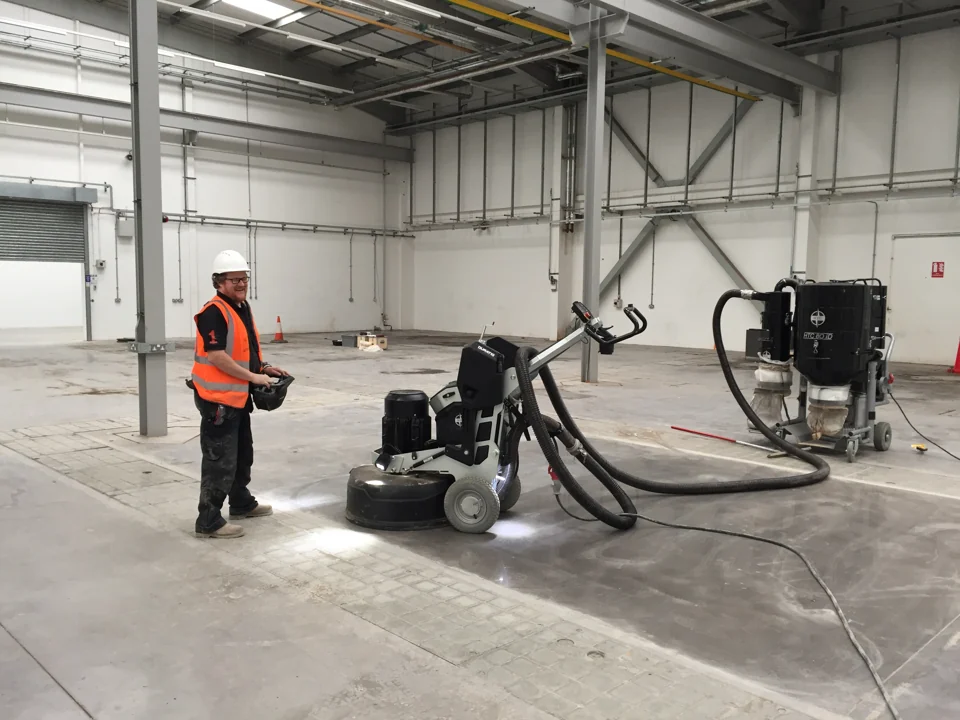
Diamond grinding is one mechanical preparation method used to remove material and develop a suitable surface profile. The tooling and approach depend on the concrete and existing finish. Failed coatings may need removal before further preparation. Corners, edges and areas around fixed equipment require attention as well as open floor areas. The method is confirmed for the site rather than promised from photographs alone.
Repairs, cracks and contamination
Local damage is assessed and compatible repairs included where required. Cracks must be reviewed for cause and movement; active or structural defects can need specialist investigation. Oil contamination may extend beneath the visible surface, so cleaning alone may not establish suitability. The preparation scope should explain what is included and how unexpected defects will be handled.
Moisture and a ready-to-coat surface
Moisture testing may be necessary before selecting a system. Results must be assessed against the product requirements, with any source of moisture considered. A suitable moisture-control approach may be possible in some cases; other conditions require investigation before coating. After preparation, dust and loose residues must be removed and the substrate checked before primer or coating is applied.