
INDUSTRIAL & COMMERCIAL FLOORING
Warehouse Flooring
Coating systems selected around storage, movement and the demands of your warehouse floor.
Understand the working environment.
Every project starts with the condition of the existing floor and the demands it will face. Share photographs, the approximate area and your target programme.
What we consider
- Forklift and pallet-truck movements
- Aisles, storage zones and loading areas
- Access windows and phased work
Forklifts, pallet trucks and loading areas
Turning and braking zones, aisle ends and loading areas can wear differently from storage bays. Small hard pallet-truck wheels also concentrate loads at joints and defects. We review these routes and the condition of the concrete before specifying a coating. A surface finish cannot make an unsuitable slab capable of carrying heavier loads.
Keep the building workable during refurbishment
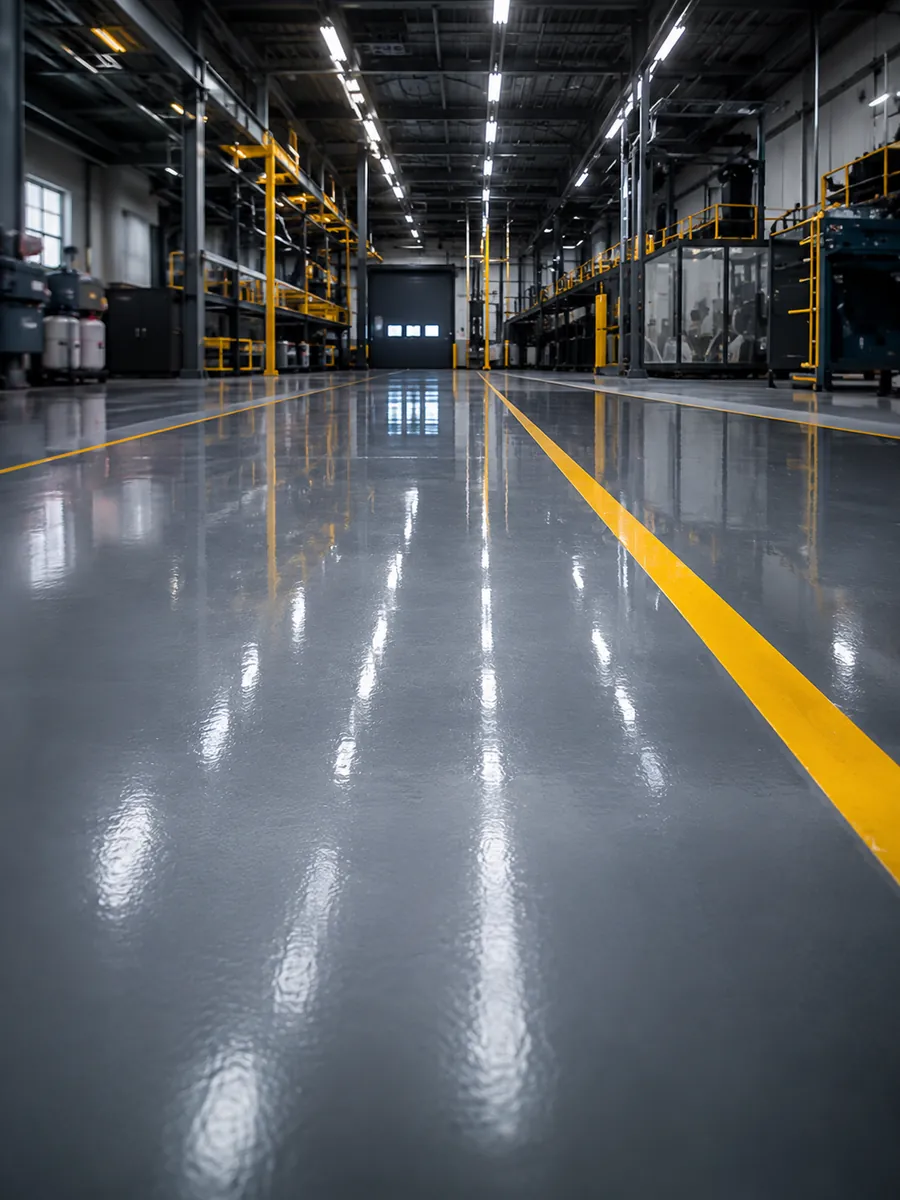
Large floor areas need a plan for stock, racking, vehicle routes and access. Where phasing is practical, agree a clear boundary for each work area and allow for preparation and cure before reopening it. Marking pedestrian routes and operational bays can form part of the same programme. We assess loading areas separately where weather, moisture or contamination changes the requirements.
Cleaning, dust and traction
Bare or damaged concrete may produce dust, while an unsound old coating can break away under traffic. Preparation and repairs address the substrate before the finish is applied. Texture can improve traction in an appropriate specification, but cleaning and spill control remain essential. The chosen finish needs to suit the cleaning equipment as well as daily warehouse traffic.
Planning your project
What affects the cost?
Area is only one part of the quotation. Failed coatings, contamination, repairs, preparation, the selected build-up and finish all affect the work. Access, moving equipment and splitting the installation into phases can also change the programme and cost. A survey helps define these items before a price is agreed.
When can the floor return to use?
Allow time for preparation and repairs as well as application and cure. Pedestrian access, forklift traffic and chemical exposure may have different return-to-use limits. Product instructions, substrate temperature and site conditions determine these limits; a dry-looking surface is not confirmation that it is ready for traffic.
Can installation be phased?
Sometimes. Each phase needs a clear working area, separation from traffic and enough time to cure. We review routes, stock movements, access and the edges between phases with you. Some sites are better suited to an agreed shutdown than a sequence of small areas.
Can you repair joints and damaged concrete?
Local defects can be included in the repair scope after assessment. Moving joints and structural cracks need appropriate treatment rather than simply filling and coating over them. Share known damage and areas where pallet trucks or forklifts catch the surface.