
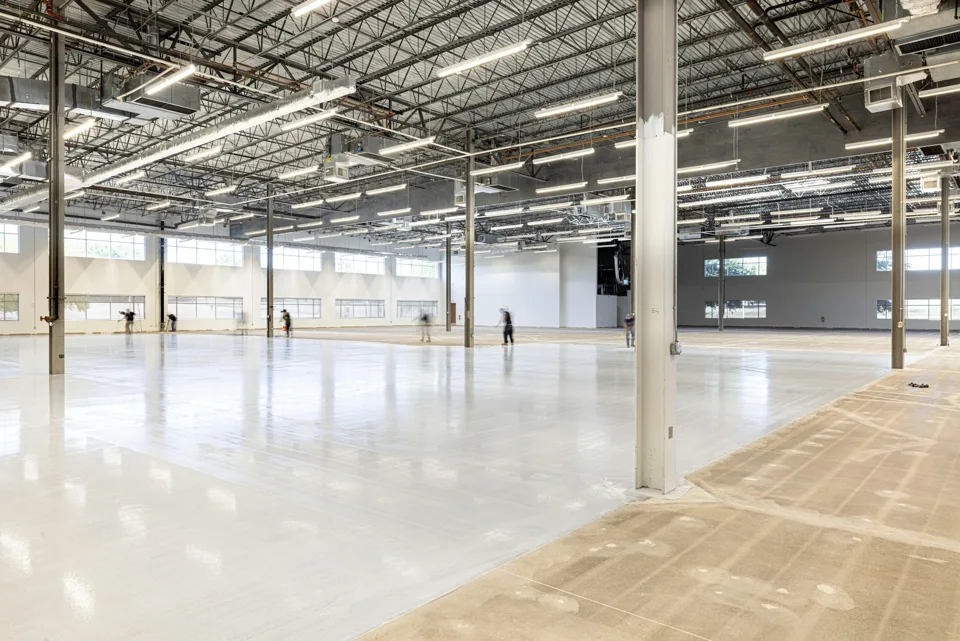
INDUSTRIAL & COMMERCIAL FLOORING
Industrial Flooring Installation
Survey, specification, preparation and installation brought together around the needs of your working floor.
A SOUND START
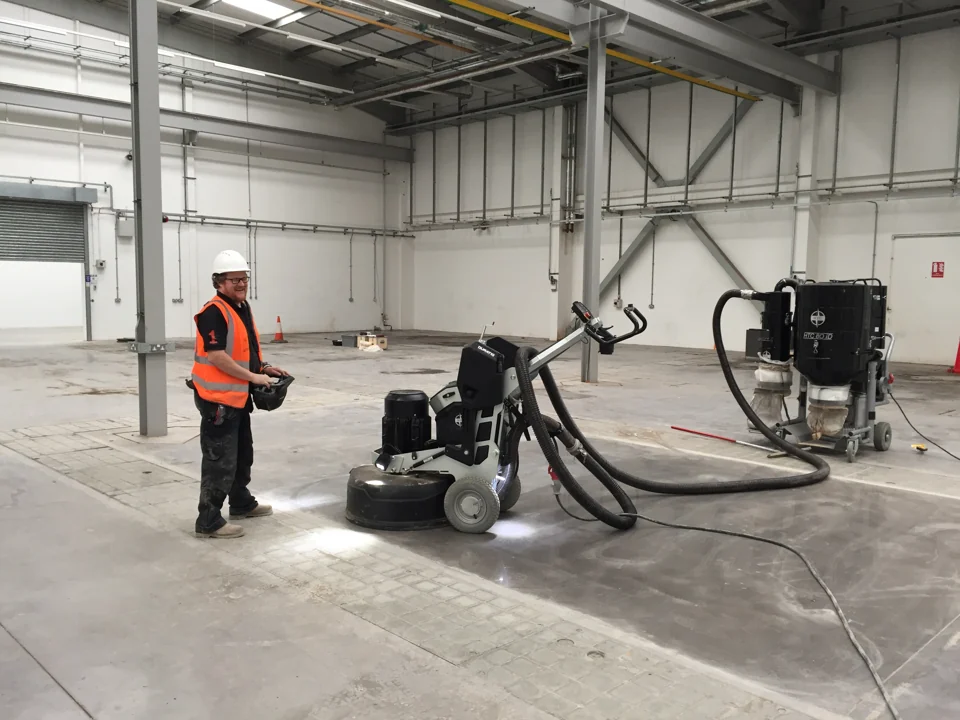
Surface Preparation
Assess the concrete, existing coating and contamination. Select mechanical preparation and cleaning around the substrate and specified system.
ADDRESS THE SUBSTRATE
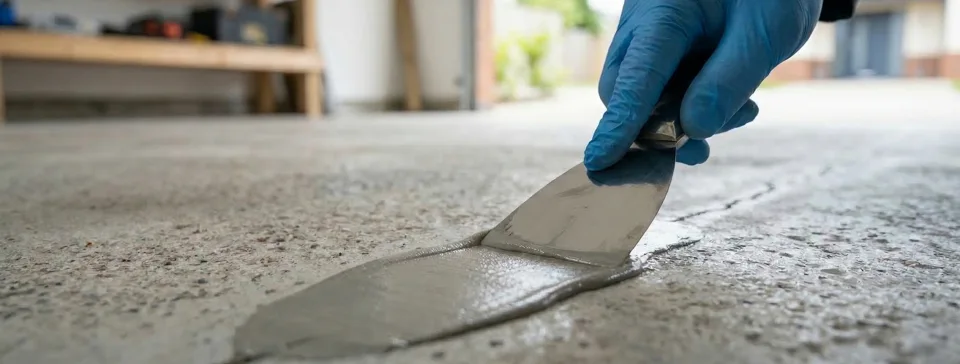
Concrete Floor Repairs
Assess cracks, damaged areas and localised defects before applying the finish. Repair scope and compatible materials are agreed for each project.

CLEAR WORKING AREAS
Line Marking & Demarcation
Defined walkways, operational bays and working zones, planned as part of your floor installation.
SUPPORTING SERVICES
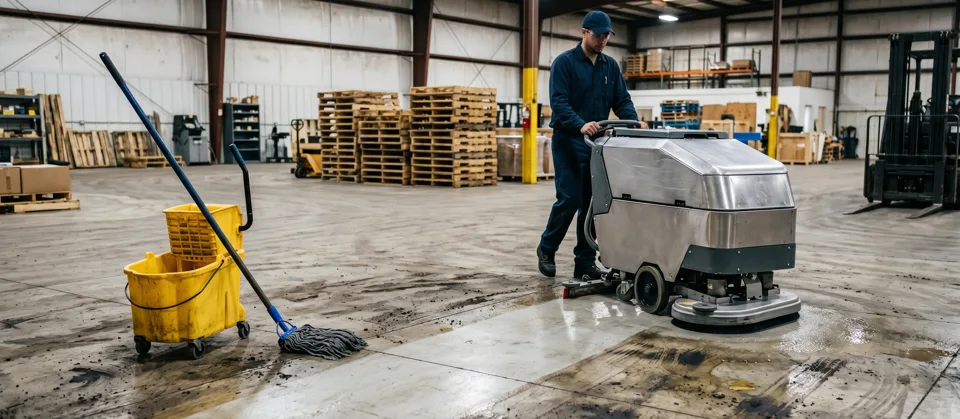
Floor Sealing
Protective sealing for suitable concrete, selected around dusting, traffic, cleaning and the condition of the substrate.

SPECIALIST VEHICLE SPACES
Professional Resin Garage Flooring
Flooring for premium garages, car collections, vehicle storage, workshops and commercial garages.
What industrial flooring needs to do
An industrial floor is a working surface for people, equipment and production. A thin maintenance coating, a higher-build resin system and a textured finish serve different needs. Selection starts with the existing substrate and the loads, wear, cleaning and contamination the floor will face. Factories, warehouses, engineering facilities and commercial workshops need that assessment before choosing a colour or chemistry.
Assess the floor before specifying the finish
We review the concrete, existing coatings, local damage and any known moisture problems. Unsound material and contamination can prevent adhesion. Cracks need assessment for movement; coating over them does not correct structural defects. Where moisture testing is required, the results influence whether work can proceed and which compatible system may be suitable.
Plan installation around operations
Share forklift routes, loading areas, fixed machinery and the areas you can clear. Preparation, repairs, priming and coating all require access. Temperature and product curing requirements influence the handover programme. Phasing or a shutdown window may be appropriate, but safe segregation and usable access routes need to be agreed first.
From survey to handover
Survey → Prepare → Repair → Prime → Coat → Handover. The exact build-up follows the assessed substrate and selected products. At handover, confirm when each type of traffic can return, how to clean the finish and how to report local damage. Routine removal of grit, prompt spill management and compatible cleaning products help protect the working surface.
Planning your project
What affects the cost?
Area is only one part of the quotation. Failed coatings, contamination, repairs, preparation, the selected build-up and finish all affect the work. Access, moving equipment and splitting the installation into phases can also change the programme and cost. A survey helps define these items before a price is agreed.
When can the floor return to use?
Allow time for preparation and repairs as well as application and cure. Pedestrian access, forklift traffic and chemical exposure may have different return-to-use limits. Product instructions, substrate temperature and site conditions determine these limits; a dry-looking surface is not confirmation that it is ready for traffic.
Can installation be phased?
Sometimes. Each phase needs a clear working area, separation from traffic and enough time to cure. We review routes, stock movements, access and the edges between phases with you. Some sites are better suited to an agreed shutdown than a sequence of small areas.